Cool belt
North Dakota yard facts: grass, season and the rules that apply
North Dakota lawns are cool-season grass, and the feeding that matters most happens around Labor Day. Here is how that shapes the jobs, and what to check before you dig or hire.
By LawnElm Editorial Team Updated 5 min read
- Grass belt
- Cool-season
- Common grasses
- Bluegrass, fine fescue
- Call 811 notice
- 48 hours
Short version
NDSU Extension writes about North Dakota lawns as cool-season grass: Kentucky bluegrass and fine fescue mowed at 3 to 3.5 inches, with the most important feeding around Labor Day. The North Dakota Public Service Commission says state law requires you to notify 811 at least 48 hours before digging. This page could not confirm the state's rule for lawn-spraying licenses or fertilizer use, and says so below.
North Dakota at a glance
Grass and climate
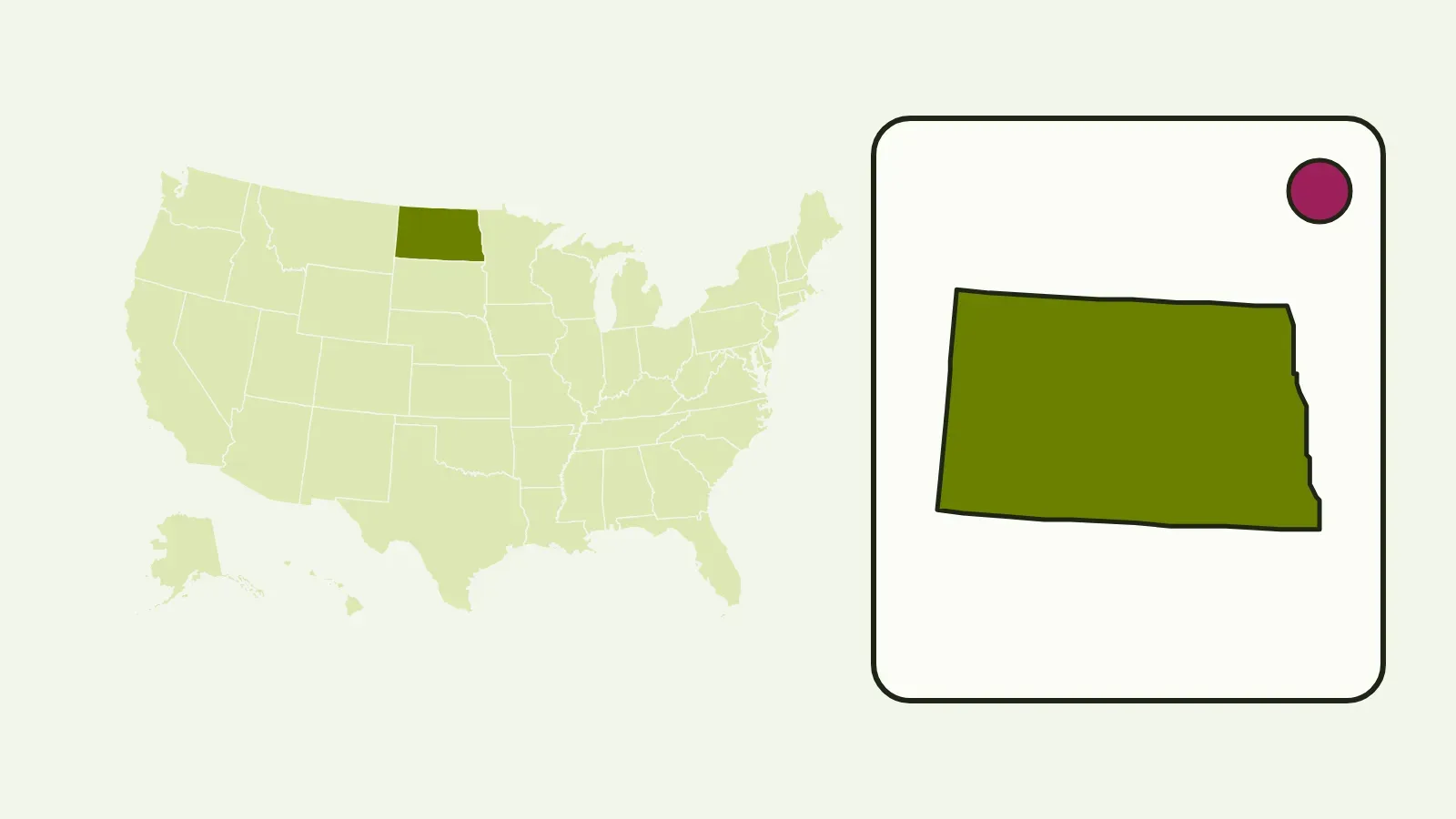
NDSU Extension's lawn advice is written for cool-season grass. Its mowing column names Kentucky bluegrass and fine fescue lawns, and its fall fertilizer column talks about helping a cool-season lawn recover from summer stress. That is why North Dakota sits in the cool belt on the state map. Cool-season grass grows most in spring and fall, and the NDSU column says a lawn is less likely to be actively growing once temperatures dip below 50 degrees Fahrenheit.
The NDSU pages read for this page do not map where each grass does best inside North Dakota, and they do not list a hardiness zone for the state. If you are choosing seed or sod, your county extension office can say which grass has held up in your part of the state.
- Kentucky bluegrass and fine fescue are the two grasses NDSU names for mowing advice.
- Quick-release fertilizer in the wrong month can hurt. NDSU's fall column describes a lawn that died over winter after an October application.
Mowing and feeding
NDSU Extension horticulturist Esther McGinnis says the best height for Kentucky bluegrass and fine fescue lawns is 3 to 3.5 inches, which is the highest setting on many mowers. Her column gives a second rule of thumb: mow often enough that you never cut off more than one-third of the blade. On a 3-inch lawn, that means mowing when the grass reaches 4.5 inches. See lawn mowing for how that sets your schedule.
The column also says to leave the clippings. They are mostly water, they decompose readily, and they contain nitrogen, so bagging them means an extra fertilizer application to make up for it.
For feeding, NDSU says the fall application is the most important one for a cool-season lawn, because it helps the lawn recover from summer stress and builds roots. It recommends applying it around Labor Day, and says fertilizing past the end of September is not recommended. To be on the safe side it recommends a nitrogen fertilizer that is 50 percent slow release, applied before September 15. It says October applications can push growth when the lawn should be getting ready for winter, which raises the risk of winterkill when the cold comes early. Turn a label rate into bags with the lawn supplies tool.
Rules for digging and spraying
The North Dakota Public Service Commission says state law requires anyone excavating to notify 8-1-1 at least 48 hours in advance of digging. Operators must mark their underground facilities at no cost to the caller, and the markings are valid for 21 days after they are placed. The law is the One Call Excavation Notice System in Chapter 49 of the North Dakota Century Code. Call before you dig a post hole, plant a tree or build a deck. The steps are in call 811 before you dig.
For pesticides, the NDSU Extension Pesticide Certification Program says it helps North Dakotans get the certification the U.S. Environmental Protection Agency requires for selling, purchasing or using restricted-use pesticides. Exams are given by appointment through county extension offices, and the program offers commercial and private categories. The pages read for this article do not say which license a crew needs to spray a lawn for hire, or which state agency issues it. Ask any company that offers weed or grub treatments for its license or certification number, and confirm it with the state before you sign.
The pages read for this article also do not state a North Dakota rule on how a homeowner or a crew applies lawn fertilizer, such as phosphorus limits or blackout dates. Ask your city and your county extension office.
Ash trees and local rules
North Dakota State University and the North Dakota Forest Service reported on January 27, 2026 that city of Fargo staff found an emerald ash borer larva, the state's second detection after LaMoure County in August 2024. The state quarantine is to be extended to Cass County, which limits moving hardwood firewood, ash logs and branches, nursery stock and wood chips. The notice says that if you treat an ash tree, most treatments are restricted-use and applied by tree care professionals with a certified applicator. See tree trimming before you hire anyone to cut or treat a tree.
Cities, water utilities and homeowners' associations can add rules for grass height, watering and yard work. No particular city's ordinance is covered here, so read yours or ask the city office. The guide to HOA and city yard rules lists what to look for.
Hiring a crew in North Dakota
Mowing and basic yard work are not the same as spraying. Before anyone applies a weed, grub or tree treatment, ask for the license or certification number, the product name and the rate, in writing. Ask the crew to avoid fertilizing in late fall, since NDSU's own advice is to finish by mid-September. The guide to hiring a lawn crew lists what a written quote should say.
Questions people ask
What kind of grass do North Dakota lawns have?
NDSU Extension's lawn columns are written for cool-season grass and name Kentucky bluegrass and fine fescue. Ask your county extension office which grass has held up in your area.
When should I fertilize a North Dakota lawn?
NDSU says the fall application is the most important, around Labor Day, and recommends a nitrogen fertilizer that is 50 percent slow release applied before September 15. It does not recommend fertilizing past the end of September.
How high should I mow a North Dakota lawn?
NDSU says 3 to 3.5 inches for Kentucky bluegrass and fine fescue, never removing more than one-third of the blade in one mowing.
How much notice does North Dakota need before I dig?
The North Dakota Public Service Commission says state law requires you to notify 8-1-1 at least 48 hours before digging. Utility markings are valid for 21 days.
Sources
- Dakota Gardener, The science of mowing your lawn (NDSU Extension, June 2023)
- Dakota Gardener, Applying fall lawn fertilizer in the northern Great Plains (NDSU Extension, September 2023)
- NDSU Extension Pesticide Certification Program
- One Call and Damage Prevention (North Dakota Public Service Commission)
- Emerald ash borer detected in Fargo (North Dakota Forest Service, NDSU)
Checked on November 20, 2026. Licensing rules and local ordinances change; confirm with your county extension office, the state and your city before you hire or spray.
Next in the yard
-

Yard job
Lawn mowing
How tall to mow, how often, and what a weekly visit includes.
-

Yard job
Lawn fertilizing
When to feed cool- and warm-season lawns, how to size a feeding, and what rules apply.
-

Guide
Call 811 before you dig
How the free 811 locate works, why notice periods differ by state, and who calls when a crew digs.