Cool belt
South Dakota yard facts: grass, season and the rules that apply
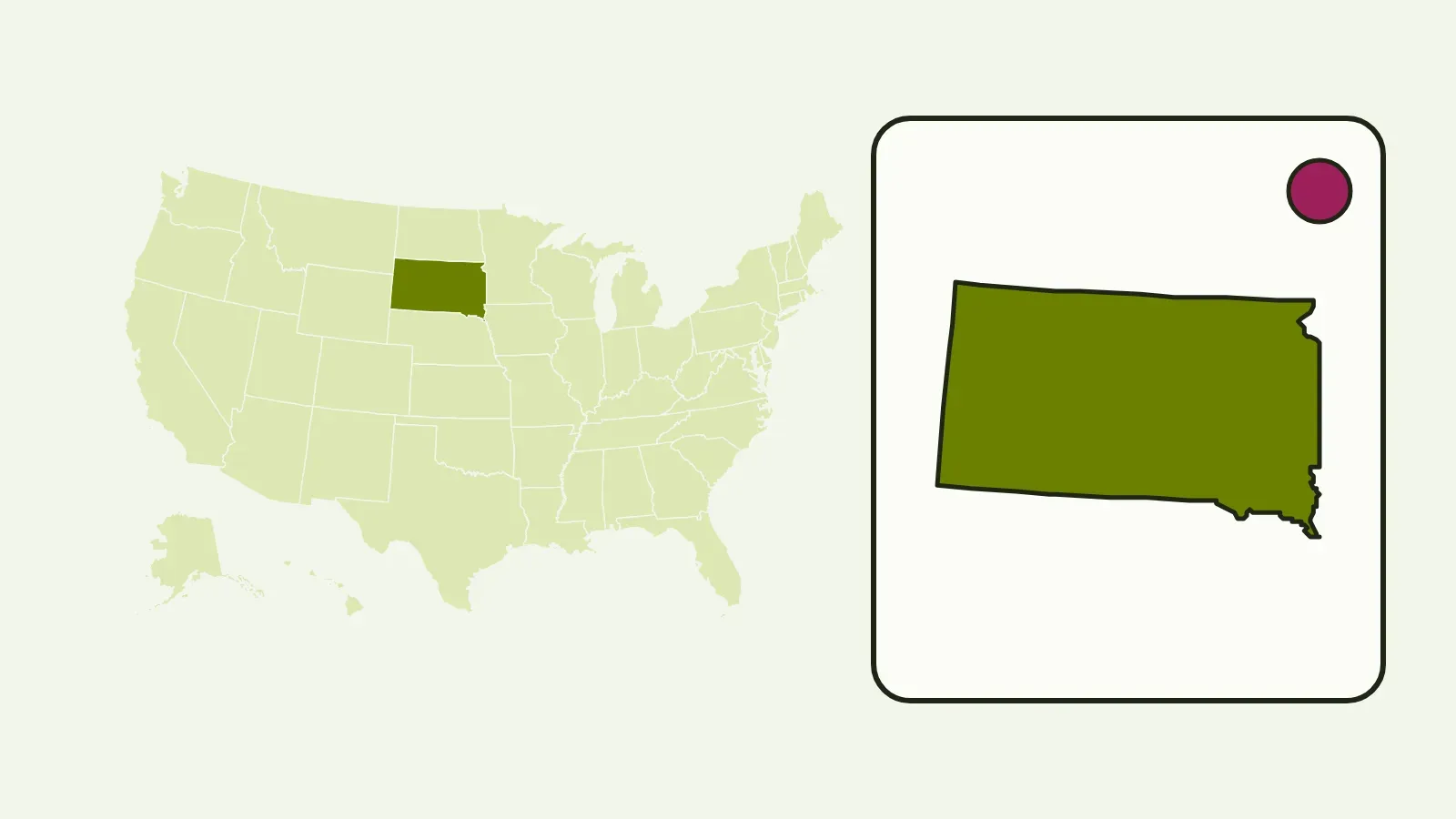
Most South Dakota lawns are Kentucky bluegrass and fescue, grasses that grow hardest in spring and fall. Here is how that shapes the jobs, and who regulates the work.
By LawnElm Editorial Team Updated 6 min read
- Grass belt
- Cool-season
- Common grasses
- Bluegrass, fescues
- Digging notice
- 2 business days
Short version
SDSU Extension says many South Dakota lawns are made up of Kentucky bluegrass and fescues, which it says to mow at 3 inches or more. The Department of Agriculture and Natural Resources requires a commercial pesticide applicator license for anyone who applies pesticides to other people's land for hire, and South Dakota 811 asks for at least two business days of notice before you dig.
South Dakota at a glance
Grass and climate
SDSU Extension says many of the lawns in South Dakota are made up of Kentucky bluegrass and fescues. These are cool-season grasses, so growth is strongest in spring and fall and slows in the heat of summer. SDSU says bluegrass can go dormant in a dry summer, and that it needs only light watering while dormant.
LawnElm places South Dakota in the cool belt on that basis. Soils and rainfall differ across the state, so ask your county extension office what has held up near you.
Mowing, water and feeding
SDSU says these grasses should be mowed to a height of 3 inches or more, never removing more than one third of the leaf area in one mowing. During heavy drought and high heat, mow only when absolutely needed. See lawn mowing.
- Active lawn in July and August: if rain does not supply it, SDSU says 1 to 1.5 inches of water per week maintains good color and growth, split into two or three deeper sessions.
- Dormant bluegrass: a light watering of one-quarter to one-half inch every three weeks if rain does not supply it.
- Fertilizer: SDSU says low to moderate maintenance lawns should be fertilized once about Labor Day. Moderate to high maintenance lawns get a first application in late August to very early September and a second about four weeks later, around October 1.
- Late season: SDSU puts the late-season window at August 15 to October 10. Overseeding should start in mid-to-late August, core aeration helps relieve compaction, and broadleaf weed control works best in September.
SDSU says pre-emergence herbicide for crabgrass goes on around May 1, and that delaying spring fertilizer until after the normal spring surge can reduce spring mowing. The lawn supplies tool turns a label rate into bags, and lawn watering and irrigation covers the schedule.
Who regulates what
The South Dakota Department of Agriculture and Natural Resources, DANR, is the lead agency for pesticide certification. It says anyone who applies pesticides for hire needs a commercial pesticide applicator license, and defines a commercial applicator as someone who applies pesticides to another person's land as a business or advertises that they do.
DANR's category guide lists Category 4, ornamental and turf pest control, for commercial applicators using pesticides on turf areas and the ornamental plants within them. Commercial applicators also pass the general core exam, Category G. If a crew sprays your lawn, ask for the license number and which categories it holds.
DANR's fertilizer program licenses fertilizer producers, dealers and distributors, issues storage permits and registers soil amendment products. Its page does not say whether the program limits lawn fertilizer use, so read the label and check your city.
South Dakota 811 says you must notify it at least two business days before excavating, by phone or online. See call 811 before you dig before any fence post, tree or deck footing.
Local rules and hiring a crew
Cities, towns, water suppliers and homeowners' associations can set their own rules on grass height, watering and yard work. Read yours before a project. Mowing and basic yard work do not need a pesticide license, but spraying does.
Ask for the license number of any company that offers weed or insect treatments, and get the product and rate in writing. The guide to hiring a lawn crew lists what a quote should say. Winter work is part of the yard year too; see snow removal.
Questions people ask
What grass do most South Dakota lawns have?
SDSU Extension says many South Dakota lawns are made up of Kentucky bluegrass and fescues.
How tall should I mow in South Dakota?
SDSU says to mow these grasses to a height of 3 inches or more, never removing more than one third of the leaf area at once.
How much notice does South Dakota require before digging?
South Dakota 811 says to notify it at least two business days before excavating, by phone or online.
Do I need a license to spray lawns for hire?
DANR says anyone who applies pesticides for hire needs a commercial pesticide applicator license. Its category guide lists Category 4 for ornamental and turf pest control.
Sources
- Summer lawn care, mowing, weed control and watering practices (SDSU Extension)
- Late season lawn care in South Dakota (SDSU Extension)
- Applicators and dealers (South Dakota DANR)
- Explanation of Commercial Pesticide Certification Category Classifications (South Dakota DANR)
- Fertilizer program (South Dakota DANR)
- South Dakota 811
Checked on November 20, 2026. Licensing rules and local ordinances change; confirm with South Dakota DANR and your city before you hire or spray.
Next in the yard
-
Yard job
Lawn watering and irrigation
How much water lawns need by belt, when to run sprinklers, and what an irrigation quote lists.
-

Yard job
Snow removal
What snow weighs, how to shovel safely, and what a snow quote should say.
-

Guide
Call 811 before you dig
How the free 811 locate works, why notice periods differ by state, and who calls when a crew digs.