Transition belt
Washington, DC yard facts: grass, fertilizer law and the rules that apply
District lawns are a mix of cool-season and warm-season grass, and a District law sets the dates and rates for professional fertilizing. Here is how that shapes the jobs, and who regulates the work.
By LawnElm Editorial Team Updated 5 min read
- Grass belt
- Transition
- Common grasses
- Tall fescue, bluegrass
- Fertilizer law
- Applies to lawn pros
Short version
The District's environment agency, DOEE, publishes fertilizer schedules for tall fescue, Kentucky bluegrass, fine fescue, zoysiagrass and bermudagrass, so both cool-season and warm-season lawns are grown in the District. The Anacostia River Clean Up and Protection Fertilizer Act of 2012 sets dates, buffers and rates for anyone who applies fertilizer to turf for wages, and DOEE's Pesticide Program oversees licensing of the companies and applicators that spray for hire.
Washington, DC at a glance
Grass and climate
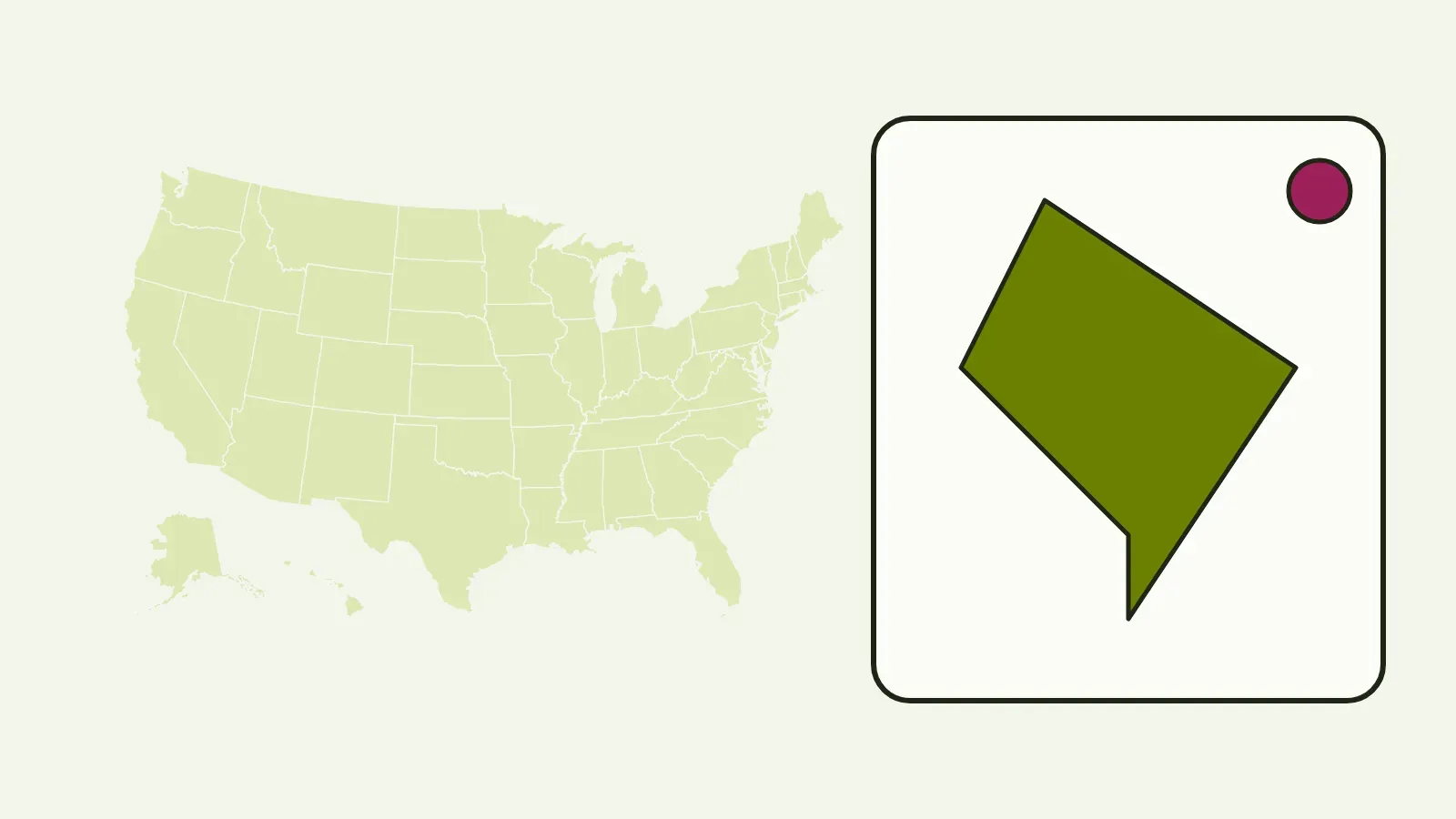
The District's environment agency, which goes by DOEE on its website, writes its lawn fertilizer schedule for five grasses. Three are cool-season: tall fescue, Kentucky bluegrass and fine fescue. Two are warm-season: zoysiagrass and bermudagrass. Both kinds are grown here, which is why the District sits in the transition belt on the state map.
The sources used here do not map which grass does best in which part of the District, and DOEE does not say which is most common. If you are unsure what you have, ask a local extension or soil-testing service before you reseed or feed. A lawn that mixes cool-season and warm-season grass is harder to feed than one that holds a single kind.
Mowing and feeding
University of Maryland Extension says to mow during the growing season: spring and autumn for cool-season turf, and summer for warm-season turf. It also gives the one-third rule: remove no more than a third of the blade at each mowing, so a 3-inch lawn is cut when it reaches 4 inches. See lawn mowing for how the rule sets your schedule.
| Grass | Kind | Mowing height |
|---|---|---|
| Tall fescue | Cool-season | 3 to 4 inches |
| Fine fescue | Cool-season | 3 to 4 inches |
| Kentucky bluegrass | Cool-season | 2.5 to 3.5 inches |
| Zoysia | Warm-season | 1.5 to 2.5 inches |
| Bermudagrass | Warm-season | 1 to 1.5 inches |
DOEE says most established lawns do not need fertilizer and suggests testing the soil and feeding only for the nutrients that are lacking. Its schedule caps nitrogen for the year: 2.7 pounds per 1,000 square feet for tall fescue and Kentucky bluegrass, 1.4 for fine fescue, 1.8 for zoysiagrass and 2.7 for bermudagrass. The lawn supplies tool turns a rate like that into bags.
Rules for fertilizer and spraying
The District's fertilizer law took effect on April 20, 2013, and is formally the Anacostia River Clean Up and Protection Fertilizer Act of 2012. DOEE says it applies to anyone who applies fertilizer to turf for wages and to entities that sell or distribute fertilizer in the District. Residents are strongly encouraged to follow the same rules, but DOEE's pages do not make them mandatory for a homeowner's own lawn.
- Under D.C. Code § 8-104.03, for-hire fertilizer can go on only after March 1 and before November 15, and not on frozen ground.
- It must stay beyond a 15-foot buffer from a waterbody, or 10 feet with a drop spreader, a rotary spreader with a deflector or a targeted liquid spray.
- Fertilizer above 0.67 percent phosphate by weight is allowed only if a soil test from the last three years shows the soil is short on phosphorus.
- Nitrogen fertilizer must be at least 20 percent slow release, with less than 0.9 pounds of total nitrogen per 1,000 square feet in one application.
The Pesticide Operations Act of 1977 is the District's pesticide law. DOEE's licensing page says each place of business that advertises or conducts pest control in the District must be licensed, and that a company needs a pesticide operator license while its applicators hold certified applicator licenses. It adds that applicators must carry their photo ID cards when they apply pesticides. That page includes older administrative details, so confirm the current steps with the DOEE Pesticide Program at 202-535-2600.
DOEE's notice rules cover lawn work. Before a contracted company applies a pesticide, it must give you its name, phone number and District operator license number, the applicator's name, and the common name of the pesticide. Applications on lawns or ornamental plants are accompanied by a sign posted on the property.
The DOEE pages listed below do not describe a separate District license for a mowing, landscaping or tree-care crew, so none is claimed here. Mowing and basic yard work are not the same as spraying.
Call 811 and local rules
Call 811 before you dig a post hole, plant a tree or build a deck. No District utility-locate page was read for this page, so the District's notice period is not stated here; ask when you call. The steps are in call 811 before you dig.
Landlords, condo boards and homeowners' associations can add rules for grass height, watering and yard work, and the District can add its own. No particular ordinance is covered here, so read yours or ask the property manager. The guide to HOA and city yard rules lists what to look for.
Hiring a crew in the District
Ask for the pesticide operator license number and the applicator's certification before anyone sprays, and get the product and the rate in writing. If the crew fertilizes, ask how it follows the District's dates, buffers and rates. The guide to hiring a lawn crew lists what a written quote should say.
Questions people ask
What kind of grass do District lawns have?
Both kinds. DOEE's fertilizer schedule covers tall fescue, Kentucky bluegrass and fine fescue, which are cool-season, and zoysiagrass and bermudagrass, which are warm-season.
When can a lawn company fertilize in the District?
D.C. Code § 8-104.03 allows fertilizer on turf for wages only after March 1 and before November 15, and not on frozen ground. DOEE says residents are encouraged to follow the same guidelines.
Does a lawn crew need a license to spray in the District?
DOEE's licensing page says each place of business that advertises or conducts pest control in the District must be licensed, and applicators must carry photo ID cards. Ask for the license number.
Which agency regulates lawn pesticides and fertilizer?
DOEE's Pesticide Program handles pesticide licensing, and DOEE publishes the District's fertilizer law and enforces it through inspections of lawn care professionals, distributors and retailers.
Sources
- Fertilizer Law (DOEE, District of Columbia)
- Best Practices for Fertilizer Use (DOEE, District of Columbia)
- D.C. Code § 8-104.03, Fertilizer application requirements (D.C. Law Library)
- Pesticide Licensing (DOEE, District of Columbia)
- Pesticides Laws and Regulations (DOEE, District of Columbia)
- Maintaining an Established Lawn (University of Maryland Extension)
Checked on November 20, 2026. Licensing rules and local ordinances change; confirm with DOEE and your landlord or association before you hire or spray.
Next in the yard
-

Yard job
Lawn mowing
How tall to mow, how often, and what a weekly visit includes.
-

Yard job
Lawn fertilizing
When to feed cool- and warm-season lawns, how to size a feeding, and what rules apply.
-

Guide
HOA and city yard rules
Who sets yard rules, from the HOA to the city to state law, and where easements fit.