Dry West
Wyoming yard facts: grass, water and the rules that apply
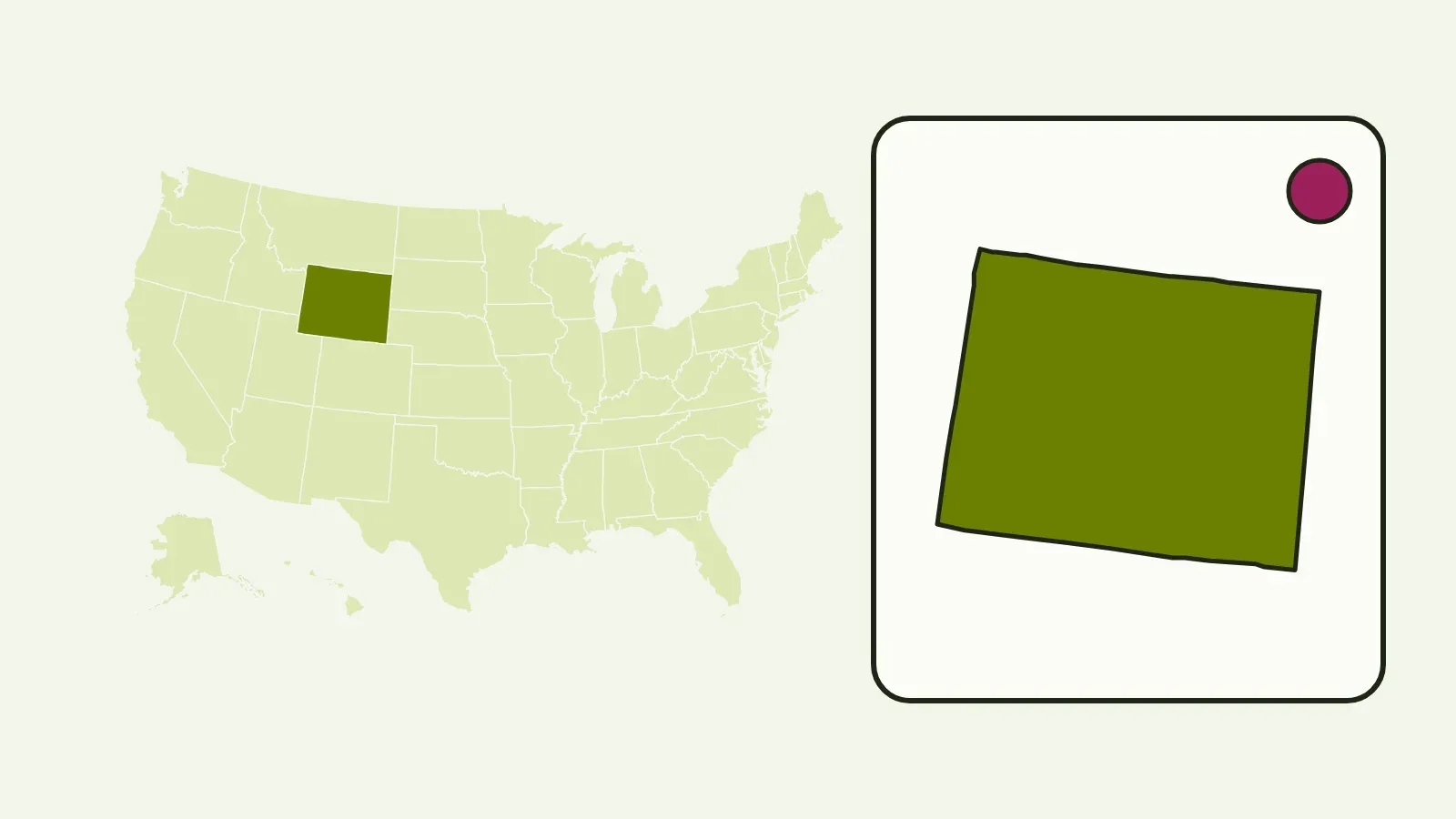
Wyoming is a Dry West state on LawnElm's map. University of Wyoming Extension says most of the state is semi-arid, so grass choice and water shape the yard. Here is what the sources say.
By LawnElm Editorial Team Updated 6 min read
- Grass belt
- Dry West
- Common grasses
- Bluegrass, fescue, native
- Spray for hire
- Ask for a WDA license
Short version
LawnElm lists Wyoming as a Dry West state, and University of Wyoming Extension supports that: it says most of the state is semi-arid. Its guides list Kentucky bluegrass, tall fescue and fine fescues for traditional lawns, and buffalograss, blue grama and streambank wheatgrass for low-water lawns. The Wyoming Department of Agriculture licenses and tests pesticide applicators. We found no Wyoming lawn fertilizer law.
Wyoming at a glance
Grass and climate
University of Wyoming Extension's turf guide B-1129, "Landscaping: Turf in Wyoming," says there are only a few basic species suitable for planting in Wyoming, that most of the state is semi-arid, and that drought-resistant species are recommended where irrigation is not available. It also says the long, cold winters virtually eliminate warm-season grasses such as bermudagrass, zoysia and St. Augustine. That supports the Dry West belt on LawnElm's map. B-1129 is a 2002 publication, so treat its details as older than the newer guides below.
The extension publication MP-158.1, "Choosing the Right Type of Grass for Your Lawn" (Chris Hilgert and Jennifer Thompson, published in 2024), sorts the choices into two groups.
- Traditional lawns: Kentucky bluegrass (including a mix with perennial ryegrass), tall fescue and fine fescues.
- Low-maintenance native lawns: buffalograss, blue grama and streambank wheatgrass, which the publication calls a native, drought-tolerant, sod-forming grass.
Elevation matters. A 2020 UW Extension article by Hilgert says the lower elevations of Wyoming, below 4,500 feet, that have hot summers are best for buffalograss, and it describes bermudagrass as not cold-tolerant and not well suited for Wyoming. The older B-1129 says the higher the elevation, the harder it is to pick a turfgrass that survives, and does not recommend buffalograss above 6,500 feet. Ask your county extension office which grass has held up at your elevation before you seed or sod.
Mowing and feeding
B-1129 says the preferred mowing height for all the species it covers is 2.5 to 3 inches, that mowing below 2 inches is discouraged, and that you should remove no more than one third of the grass height at a mowing. It says bluegrass and fescue may need mowing every 3 to 4 days in spring and every 7 to 10 days in heat, drought or cold, and that buffalograss may need mowing only every 10 to 20 days. It does not give start and end dates. The newer MP-158.1 does not address mowing height. See lawn mowing for how the one-third rule works, and lawn watering and irrigation, since water is the main question on a Dry West lawn.
For feeding, the 2022 UW Extension article "Home Lawn Fertilization 101," by Chris Hilgert, says a manicured lawn in Wyoming needs fertilizer one to two times a year, the earliest being shortly after the lawn greens up in spring with a quick-release product. It gives two limits as general guidance: no more than 1 pound of nitrogen per 1,000 square feet per application, and 1 to 2 pounds per year for most Wyoming lawns. It also says to follow the bag. The lawn supplies tool turns a rate from a label or an extension publication into bags.
Pesticide licensing and fertilizer
The Wyoming Department of Agriculture's Technical Services Division runs the state Pesticide Program. The department's page lists pesticide applicator training, certification and licensing among its work, along with enforcement of the Wyoming Environmental Pesticide Control Act of 1973. It links the department's applicator licensing and testing page, University of Wyoming applicator training, and searchable lists of licensed commercial and private applicators.
That list is useful when you hire. If a crew sprays your lawn for weeds or insects, ask for its license, then look it up on the commercial applicator search. The page we read does not say which license category covers lawn work, or spell out who must be licensed to spray for hire, so ask the department by phone at (307) 777-7321 or by email at [email protected] before you rely on a crew's answer. The page also links a resource called "Pesticides and Wyoming Homeowners," which we did not open.
We did not find a Wyoming fertilizer law or any limit on lawn fertilizer, and we make no claim either way. Cities, towns and homeowners' associations can have their own rules, so ask yours before a project.
Calling 811 and local rules
The Wyoming Department of Transportation's One-Call page says to dial 811 in Wyoming, and that state law requires advance notice to the notification center before any excavation. The notice must come at least two full business days, but not more than fourteen days, before the excavation project begins. The page does not say who must call or cite a statute section, so ask the center whether the rule covers your project. See call 811 before you dig.
Water restrictions, grass-height rules and HOA covenants can all apply to a Dry West yard. None were checked for this page. The guide to HOA and city yard rules explains where to look.
Hiring a crew in Wyoming
Mowing and raking are a different kind of work from spraying. Ask any company that offers weed or insect treatments for its Wyoming Department of Agriculture license, the product and the rate in writing. The guide to hiring a lawn crew lists what a written quote should say.
Questions people ask
What grass should I plant in Wyoming?
UW Extension's MP-158.1 lists Kentucky bluegrass, tall fescue and fine fescues for traditional lawns, and buffalograss, blue grama and streambank wheatgrass for low-maintenance native lawns. Elevation limits some of them, so ask your county extension office.
How much water does a Wyoming lawn need?
It depends on the grass. MP-158.1 lists 1 to 2 or more inches a week for Kentucky bluegrass and about 1 inch a month in hot, dry periods for the native grasses.
Who regulates pesticide applicators in Wyoming?
The Wyoming Department of Agriculture's Pesticide Program handles applicator training, certification and licensing, and enforces the Wyoming Environmental Pesticide Control Act of 1973.
Does Wyoming limit lawn fertilizer?
We did not find a Wyoming fertilizer rule, so we cannot say. UW Extension advises no more than 1 pound of nitrogen per 1,000 square feet per application, but that is guidance. Ask the Wyoming Department of Agriculture and your town.
How long before digging do I call 811 in Wyoming?
The Wyoming DOT One-Call page says at least two full business days, but not more than fourteen days, before the excavation begins.
Sources
- Lawns (University of Wyoming Extension, Barnyards and Backyards)
- Choosing the Right Type of Grass for Your Lawn, MP-158.1 (University of Wyoming Extension)
- Landscaping, Turf in Wyoming, B-1129, 2002 edition (University of Wyoming Extension)
- Selecting Turfgrass for Wyoming, Fall 2020 (University of Wyoming Extension)
- Home Lawn Fertilization 101, Summer 2022 (University of Wyoming Extension)
- Pesticide Program (Wyoming Department of Agriculture)
- One-Call of Wyoming (Wyoming Department of Transportation)
Checked on November 20, 2026. Licensing rules and local ordinances change; confirm with the Wyoming Department of Agriculture and your town before you hire or spray.
Next in the yard
-

Yard job
Lawn watering and irrigation
How much water lawns need by belt, when to run sprinklers, and what an irrigation quote lists.
-

Guide
How to hire a lawn crew
Licenses, insurance and written quotes to check before a lawn or landscape crew starts work.
-

Guide
Call 811 before you dig
How the free 811 locate works, why notice periods differ by state, and who calls when a crew digs.